
Bridging the Chasm: How Modern AI Research is Transforming Enterprise AI Business Infrastructure
Bridging the Chasm: How Modern AI Research is Transforming Enterprise AI Business Infrastructure
The boundary keeping cutting-edge academic breakthroughs isolated from enterprise operations has completely dissolved. We have firmly entered an era where breakthrough AI research from elite research institutions and deep-tech labs is commercialized in a matter of days, radically shifting the landscape of global business AI. Enterprise leaders can no longer look at machine learning as a simple SaaS utility add-on; it has become a fundamental driver of corporate value creation.
From agentic workflows that optimize financial analytics to advanced multi-modal models trained to interpret corporate logistics, companies are using sophisticated algorithmic infrastructure to secure a structural competitive advantage. As pioneered by platforms like neetoai.com, implementing these research developments effectively requires a deep understanding of token dynamics, scalable model context windows, and autonomous software optimization.
1. Micro-Lab to Boardroom: Key Trends in Modern AI Research
For decades, enterprise business solutions relied on static, rule-based algorithmic structures. Today, deep learning frameworks have evolved past basic natural language pattern recognition into complex reasoning ecosystems. The transition is anchored by three massive trends dominating the research spaces:
The Evolution of Token Efficiency & Context Architecture
Recent research structures focus heavily on reducing compute barriers. Companies no longer require massive processing arrays to run proprietary models. New breakthroughs in architectural tokenization allow multi-million token context windows to process structural documentation, legal compliance histories, and real-time sensor streams at a fraction of past infrastructure costs.
Autonomous Agentic Frameworks
Rather than acting as reactive chatbots that wait on human commands, modern system pipelines focus on proactive operational loops. These systems run continuous feedback chains, auditing their own mathematical outputs, browsing multi-tool systems to grab external contextual elements, and executing compound actions directly through programmatic corporate APIs.
2. Commercial Applications: Redefining the AI Business Strategy
Deploying academic innovations directly into customer-facing software lines requires deep strategic foresight. Enterprises are fundamentally reimagining how data moats are constructed and maintained.
- Hyper-Personalized Knowledge Retrieval: Transitioning from generic corporate wikis to intelligent retrieval-augmented generation (RAG) meshes that synthesize internal product blueprints on the fly.
- Algorithmic Supply Chain Prediction: Merging advanced transformer models with physical telemetry data to accurately forecast manufacturing demands and supply lane friction ahead of competitors.
- Next-Generation Multi-Modal Deployment: Transitioning from purely text-based interfaces to systems that seamlessly accept, understand, and generate media across image, voice, and native video channels.
3. The Parallel Shift in Creative Landscapes: Autonomous Video Automation
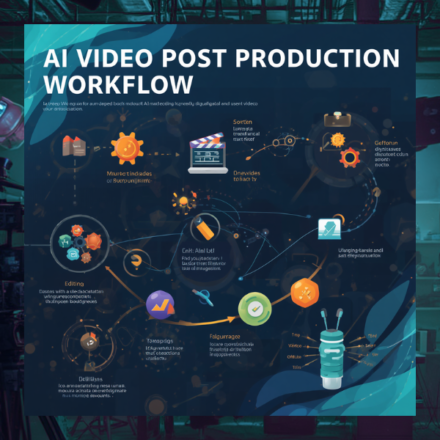
The rapid cross-pollination of structural research directly impacts practical multi-modal business verticals. To best understand how these machine learning pipelines manifest in functional day-to-day business operations, observe how foundational vision research has completely revolutionized creative media asset pipelines. The responsive table below highlights four top-tier AI video tools designed to handle complex asset orchestration with complete technical precision.
| AI Video Editing Tool | Core Automation Focus | Standout Research-Driven Features | Primary Professional Fit |
|---|---|---|---|
| Adobe Premiere Pro | Timeline Editing Optimization | Text-Based Dialogue Trimming, Automated Neural Speech Enhancement, Generative B-Roll Matching | Enterprise Creative Agencies, TV and Film Production Houses |
| DaVinci Resolve | VFX & Cinematic Color Mastery | Magic Object Masking, Multi-Axis Target Tracking, Intelligent Automated Scene-Cut Classification | Professional Colorists, Post-Production VFX Engineers |
| Runway Gen-3 | Generative Multi-Modal Video Production | Text-to-Video Synthesis, High-Fidelity Directional Motion Control, Generative Outpainting Pipelines | VFX Concept Artists, Independent Filmmakers |
| CapCut Desktop | High-Velocity Micro-Content Delivery | AI Script-to-Video Assembly, Smart Vertical Aspect Auto-Reframe, Dynamic Kinetic Caption Syncing | Social Creators, TikTok Marketers, E-commerce Shops |
4. Mitigating Enterprise Risk: Hallucination and Alignment Realities
Integrating advanced models into critical infrastructure requires strict adherence to alignment guardrails. AI research teams are focusing heavily on technical solutions to keep automated applications working safely within exact operational constraints:
- Deterministic Anchor Layering: Wrapping open-ended conversational models inside structured code verification layers to block erratic or unverified software interactions.
- Continuous Preference Optimization: Utilizing refined human-feedback learning matrices to align model reasoning directly with strict industry regulatory standards.
- Strict Data Compliance Isolation: Designing decoupled on-premise model environments to guarantee private corporate proprietary code never leaks into open-source web indexers.
Strategic Perspective: Unifying Business Models and Academic Breakthroughs
Staying ahead in the modern corporate landscape requires checking the latest academic preprint papers as closely as quarterly revenue metrics. The businesses achieving massive scaling heights are those building deep connections between internal engineering stacks and the frontier edges of computer science. By abandoning outdated standalone software frameworks and building dynamic, context-aware agentic systems, forward-thinking enterprises are forging an indestructible operational foundation for decades to come.