
The Rise of E-Mail AI Agents: The Definitive Guide on Which Platforms to Use
The Rise of E-Mail AI Agents: The Definitive Guide on Which Platforms to Use
The modern inbox has officially passed the point of human scale. As digital workflows grow increasingly fragmented, professional professionals, enterprise organizations, and e-commerce leaders are experiencing unprecedented messaging volume. Simple automated responders and basic sorting rules are no longer sufficient to remain competitive. The industry has decisively entered the era of autonomous e-mail AI agents.
Unlike early AI tools that merely drafted rudimentary copy or flagged spam, today’s intelligent AI automation ecosystems feature deep memory retention, secure software integration, context-aware reasoning pipelines, and direct multi-tool task orchestration. In this deep-dive guide presented by neetoai.com, we break down the definitive shifts reshaping AI communications and evaluate the top intelligent inbox agents you should deploy right now.
1. What Exactly is an E-Mail AI Agent?
An e-mail AI agent is an autonomous software entity powered by an underlying large language model (LLM) framework. Rather than acting as a static text editor, the agent functions as a virtual Chief of Staff for your digital communication channels. It works around the clock to understand user intent, synthesize corporate context, and perform actions directly across interconnected software apps.
The Shift from Automation to Autonomy
Traditional software workflows required manual conditional formulas (“If an email arrives containing ‘Invoice’, move it to folder X”). Conversely, an autonomous agent processes the semantic nuances of language. It reads an incoming message, identifies an upset customer, cross-references internal company databases to understand the history, updates the CRM records, drafts a hyper-personalized response, and queues the reply for approval—completely unassisted.
Core Capabilities of Modern AI Communications Stack
- Intent and Sentiment Analysis: Instantly classifying incoming requests based on urgency, mood, and explicit commercial value.
- Context-Aware Data Extraction: Pulling attachments, custom pricing tables, or meeting schedules straight into target workspace hubs without manual intervention.
- Proactive Action Routing: Delegating action items internally or interacting autonomously with external APIs to settle support requests, manage logistical pipelines, or scale out AI marketing funnels.
2. Which E-Mail AI Agents Should You Use?
Selecting the right technical ecosystem depends entirely on your corporate infrastructure, budget, and structural security constraints. Here are the clear industry leaders spearheading the inbox revolution this year.
Shortwave AI
For individuals and teams operating heavily inside the Google Workspace architecture, Shortwave serves as an incredibly fast AI-native layer. Its underlying infrastructure constructs an ongoing knowledge graph from your historical data streams, enabling the agent to draft contextually perfect responses, extract calendar event logistics instantly, and summarize multi-person email chains into a concise bulleted brief.
- Best For: High-velocity professionals seeking real-time workspace optimization and automated scheduling.
- Key Advantage: Exceptional context retrieval and natural conversational synthesis.
MultiOn E-Mail Copilot
MultiOn represents a generational leap by utilizing web-agent capabilities. It does not just stay confined to your text window; it uses browser-based action models to log into client portals, track shipping status, download vendor receipts, and respond to incoming emails with concrete external validation data.
- Best For: Operations managers and logistics teams managing complex external vendor communications.
- Key Advantage: True autonomous browser-action functionality that bridges the inbox with the open web.
Superhuman AI
Long considered the benchmark for premium email execution, Superhuman features deeply integrated AI features built natively into its minimalist desktop app. Its system features instant text rewriting tools, smart multi-language translation toggles, and an automated preprocessing core that automatically isolates priority enterprise interactions while drafting corresponding replies in your personal brand voice.
- Best For: Founders, executives, and power users who need to maintain an absolute zero-inbox layout with zero friction.
- Key Advantage: Blazing-fast keyboard navigation paired with zero-latency model inference.
Reclaim.ai Inbox Sync
Reclaim approaches email management through the lens of strict time-blocking and corporate productivity metrics. The agent evaluates your unread messages, analyzes the real-world time required to fulfill associated tasks, and automatically restructures your corporate calendar around priority deliverables without manual schedule shifting.
- Best For: Project managers and remote software engineering teams trying to balance intense execution schedules with incoming client requests.
- Key Advantage: Seamless architectural binding between messaging streams and structural calendar management.
3. Cross-Industry AI Automation: Creative Ecosystem Parallel
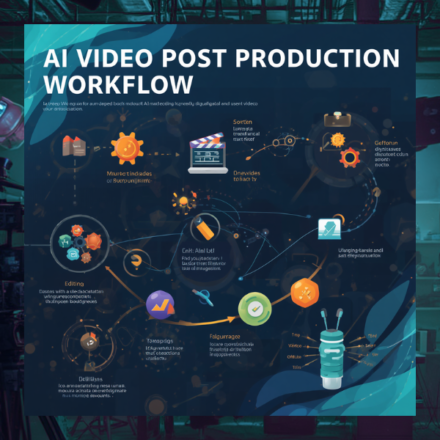
The core paradigm behind autonomous text execution—offloading repetitive mechanical workflows to deep learning systems—is identically mirroring developments across other operational departments. To demonstrate how specialized automation lines function outside of business AI messaging tools, look at the comparison table below breaking down four market-defining AI video editing applications engineered to handle visual assets with similar algorithmic precision.
| AI Video Editing Tool | Core Optimization Focus | Standout Automated Features | Primary Professional Fit |
|---|---|---|---|
| Adobe Premiere Pro | Professional Non-Linear Editing | Text-Based Timeline Trimming, Neural Speech Enhancement, Auto-B-Roll Mapping | Enterprise Creative Agencies, TV & Film Production Houses |
| DaVinci Resolve | Cinematic Color & VFX Workflows | Magic Object Masking, Multi-Axis Tracking, Automated Scene-Cut Classification | Colorists, Professional Visual Post-Production Engineers |
| Runway Gen-3 | Generative Multi-Modal Video Production | Text-to-Video Outpainting, Prompt-Based Motion Control, Structural Asset Synthesis | VFX Concept Artists, Independent Filmmakers |
| CapCut Desktop | High-Speed Micro-Content Extraction | AI Script-to-Video Compilation, Smart Vertical Reframing (9:16), Kinetic Captions | Social Creators, TikTok Advertisers, E-commerce Shops |
4. Strategic SEO Content Infrastructure for AI-Driven Workflows
Deploying automated software pipelines changes how content must be discovered and organized. To ensure your digital brand remains highly authoritative across major search engine crawls and algorithmic discovery channels, execute these foundational steps:
- Structured Metadata Injection: Implement clean schema markups outlining technical software specifications, making it readable for machine-learning web indexers.
- Context-Anchored Long-Tail Targeting: Build out search frameworks targeting high-intent business questions (e.g., “Which secure AI agent integrates natively with complex CRM infrastructures?”).
- Dynamic Context Hygiene: Ensure all direct links, API calls, and outbound reference citations remain current to build verifiable system authority.
Strategic Wrap-Up: Choosing Your Autonomous Messaging Stack
Transitioning your workflow to an autonomous email system requires evaluating your specific technical boundaries. If your goal centers around rapid workspace organization and data retrieval inside the Google ecosystem, Shortwave AI represents the premier baseline. For heavy multi-tool enterprise manipulation and web-based execution, MultiOn provides the necessary agentic leverage. By systematically adopting these intelligent AI tools, you remove the operational friction of manual media processing—allowing you to allocate your cognitive resources exclusively toward high-level strategy, business growth, and creative execution.